
Class IV laser therapy.
FDA-cleared deep-tissue laser that delivers therapeutic light to support cellular repair, reduce inflammation, and ease pain. Drug-free, non-invasive, used alongside chiropractic care for faster recovery.
- FDA-clearedClass IV system
- 5–10 minper session
- Drug-freeNo needles, no meds
Drag the depth slider to see what the beam is reaching.
A side-cut illustration of skin, fat, muscle, and deep periosteal tissue. Move the laser-beam line up or down to see what the Class IV beam treats at each depth.
Reaching superficial muscle.
At this depth the beam is calming surface muscle inflammation, settling minor strains, and supporting recovery from post-workout soreness or shallow trigger points.
Common conditions for Class IV laser.
Back & neck inflammation
Reduces inflammation around irritated joints and disc tissue.
Nerve pain & sciatica
Calms inflamed nerve roots so other treatments can hold.
Joint pain (knee, shoulder, ankle)
Tendinopathy, bursitis, post-injury joint pain.
Soft tissue strains
Pulled muscles, tight bands, post-surgical recovery.
Plantar fasciitis
Foot heel pain that hasn't responded to stretching alone.
Recovery support
Faster recovery from auto injury, sports injury, or post-decompression.
Quick, warm, easy.
Targeted setup
You expose the treatment area. The therapist puts safety glasses on you (and themselves) — the laser is bright.
5–10 minute treatment
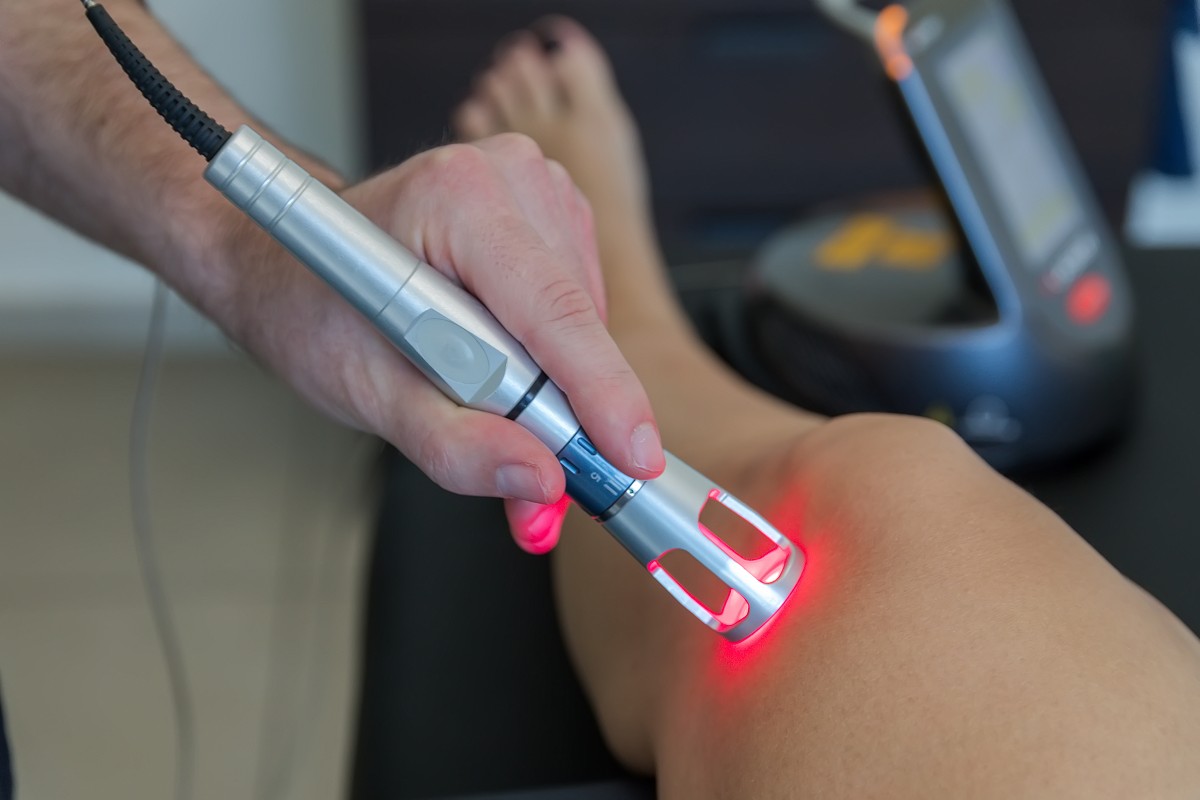
The laser head moves in slow circles over the treatment area. You'll feel a gentle warmth — no pain, no needles.
Cumulative effect
One session can help. Multiple sessions over days/weeks build the full anti-inflammatory benefit.
Pair with other care
Often combined with adjustments, decompression, or shockwave for a more complete recovery plan.
Quick answers.
Does it hurt?
No. Most patients describe the sensation as a gentle, deep warmth. We adjust the power if anything is too warm.
How is Class IV different from cold laser?
Class IV is higher-power and reaches deeper tissue than cold (Class III) laser, with shorter session times. Both are FDA-cleared categories — Class IV is the modern standard for deep-tissue clinical use.
How many sessions will I need?
It varies — Dr. Banman recommends a plan based on your condition. Most patients do a series over 2–6 weeks for full effect, paired with other care.
Are there side effects?
Class IV laser has an excellent safety profile. Some patients feel a mild aching for 24 hours as inflammation resolves — usually a sign it's working.
Will insurance cover it?
Class IV laser is rarely covered. HSA and FSA funds are widely accepted. See payment options →
Your first Class IV laser therapy visit at SWC Lakewood Ranch.
A walk-through so you know exactly what to expect when you come in.
Before the session
Wear comfortable clothing that lets you expose the treatment area easily — a knee, shoulder, lower back, or neck. Skip lotions, oils, or sunscreen on the area; they can interfere with how the laser energy is absorbed. There's no fasting, no needles, no medication, and no downtime to plan around. Most patients book Class IV laser therapy on a lunch break or right after work.
During the session
You and the therapist both wear protective glasses — the laser light is bright. Dr. Banman or a trained technician moves the laser handpiece in slow, sweeping circles over the target area for roughly 5 to 10 minutes. Most patients feel a gentle, deep warmth and many report it as one of the more relaxing parts of their visit. If anything ever feels too warm, the power is dialed back instantly.
After the session
You walk out and resume your day — there are no activity restrictions after Class IV laser therapy. Many patients report feeling looser within minutes; some notice a mild aching for a day as inflammation settles, which is generally a sign the tissue is responding. Studies have shown laser therapy can support tissue healing when delivered as a series, so Dr. Banman typically maps out 6–10 sessions for stubborn or chronic cases.
Wondering if laser fits your case?
Quickest way is a phone call. We'll talk it through.