
Shockwave therapy.
Acoustic-wave technology that helps break down scar tissue and stimulate blood flow. A non-invasive, drug-free option for chronic tendon, joint, and soft-tissue conditions that haven't responded to other care.
- Non-invasiveNo needles or surgery
- Drug-freeNo medications
- Per-areaQuick targeted sessions
Four common targets. One acoustic pulse.
Pick a region. We’ll zoom into the actual anatomy — tendon, fascia, muscle — and fire a shockwave pulse where it matters. Each ring you see is the same wavefront the device delivers into tissue.
Calcium deposits in the rotator cuff.
Calcific shoulder tendinopathy is one of the highest-yield uses of shockwave. The acoustic pulses can mechanically break down the calcium deposits sitting inside the supraspinatus tendon and trigger the body to clear them — restoring movement that had been stuck for months or years.
- Calcific tendinitis
- Rotator cuff irritation
- Subacromial pain
Tap any region. Tap the glowing target to fire a shockwave pulse.
Best for stubborn, chronic cases.
Plantar fasciitis
Heel pain that's lingered through stretching and PT.
Tennis & golfer's elbow
Lateral and medial epicondylitis.
Achilles tendinopathy
Chronic tendon pain that hasn't healed.
Patellar tendinopathy
"Jumper's knee" — chronic knee tendon pain.
Rotator cuff issues
Calcific tendinitis and chronic shoulder pain.
Trigger points & muscle knots
Chronic, stubborn knots that haven't released.
What to expect.
Targeted area exposed
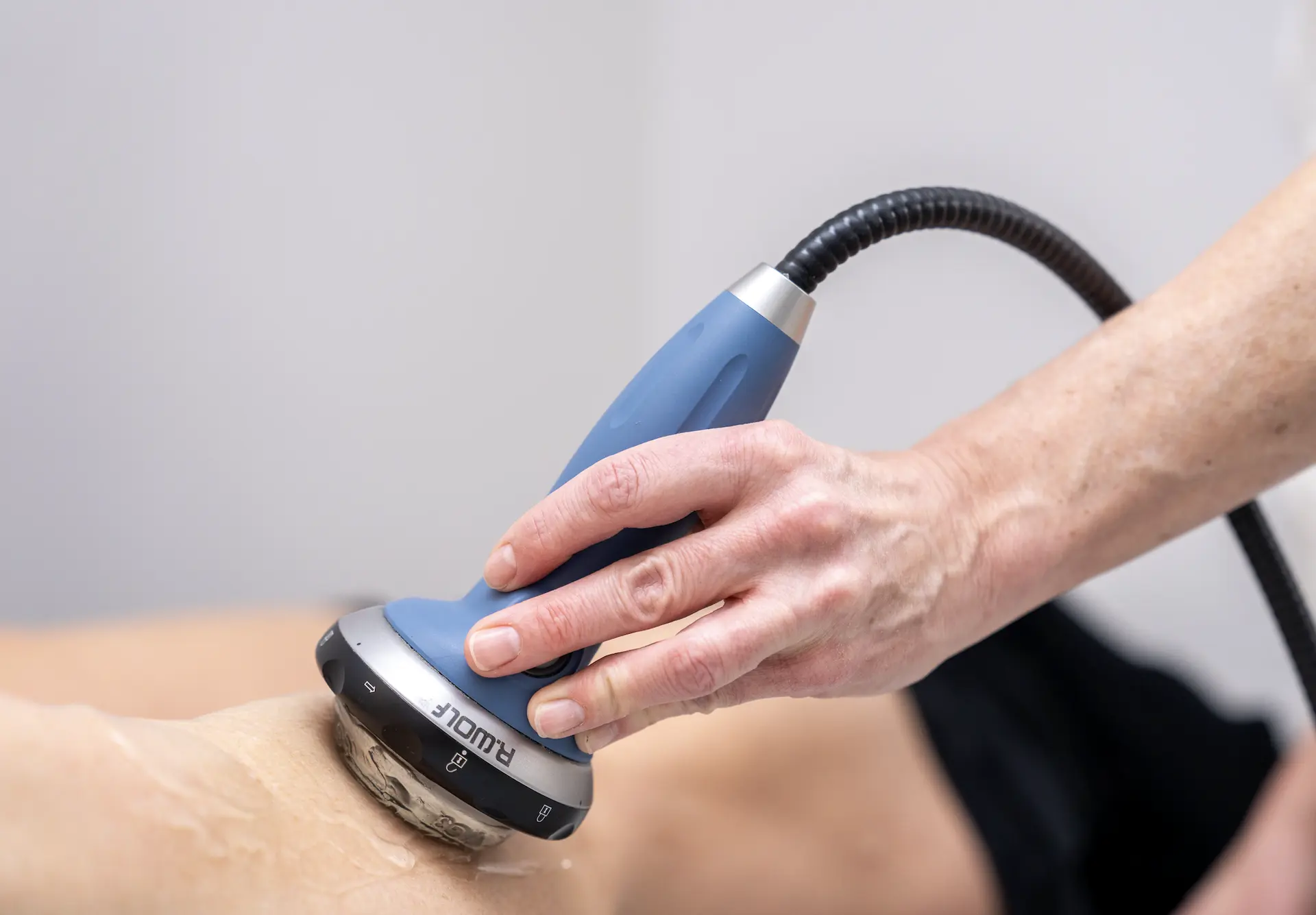
Just the treatment area — gel applied to help the wave conduct.
5–10 minutes of pulses
You'll hear a clicking sound and feel a tapping pressure. Mildly intense but tolerable. We can adjust intensity in real time.
Brief soreness, then improvement
It's normal to feel a little sore for 24–48 hours afterward. That's the inflammation response that drives the healing.
Plan over several weeks
Most chronic cases need 3–6 sessions over a few weeks for the full effect.
Quick answers.
Does shockwave hurt?
It's intense but tolerable — most patients describe it as a strong tapping. We adjust energy in real time so it's never beyond what you can comfortably handle.
How is it different from ultrasound?
Ultrasound delivers continuous high-frequency sound waves; shockwave delivers brief, high-energy mechanical pulses. The mechanism, dose, and effect are very different — shockwave is more aggressive but better for breaking up chronic scar tissue.
How many sessions does it take?
3–6 sessions, usually 1–2 weeks apart. Dr. Banman maps the plan after the exam.
Are there side effects?
Mild soreness or some surface bruising for 24–48 hours is common — and a sign the treatment is working. Serious side effects are rare.
Will insurance cover it?
Shockwave is rarely covered. HSA/FSA accepted. Payment options →
What to expect during your shockwave therapy session.
A typical shockwave therapy visit at our Lakewood Ranch office is brief, focused, and designed around the area giving you trouble — most patients are in and out in well under thirty minutes.
Walking in for your first visit
Before any shockwave therapy is delivered, Dr. Banman reviews your case history, examines the affected area, and confirms that shockwave is the right fit for what you're dealing with. If a different therapy will serve you better, we say so. Many patients are referred in for a stubborn tendon, heel pain, or shoulder calcification that hasn't budged with other treatment, and the exam is where we map a realistic path forward.
Is shockwave therapy painful?
Most patients describe shockwave therapy as a strong tapping or rapid pressure sensation rather than sharp pain. The intensity is fully adjustable in real time, so we can dial it up or down as your tissue responds. Many patients report that the area being treated actually feels looser and lighter immediately after the session, even before the deeper tissue remodeling kicks in over the following days.
How many shockwave therapy sessions will I need?
The typical course of shockwave therapy runs three to six sessions spaced roughly one to two weeks apart. Stubborn cases — long-standing plantar fasciitis, calcific rotator cuff, or chronic Achilles tendinopathy — sometimes need a few additional visits. Dr. Banman builds a session-by-session plan after the initial exam so you know what you're committing to up front.
Is shockwave therapy safe?
Acoustic-wave shockwave therapy has a strong safety record for the soft-tissue conditions we treat, and serious complications are rare. The most common after-effect is mild surface bruising or a 24- to 48-hour soreness in the treated area — studies suggest that brief inflammatory response is part of the mechanism that supports healing. We screen for the few situations where shockwave isn't appropriate (active infection, open wounds, certain blood-thinner regimens) before we treat.
Aftercare and what helps the result stick
After a shockwave therapy session we recommend keeping movement gentle for the rest of the day, hydrating well, and avoiding ice on the treated zone — the inflammation that follows the pulse is doing useful work. Many patients report the biggest changes show up two to three sessions in, when the cumulative effect of the acoustic pulses starts to add up.
Got a stubborn tendon or trigger point?
Call and we'll help you decide if shockwave fits your case.