
Is EMS the right call for your muscle pain?
EMS helps a specific kind of case: a muscle that has shut down or stayed guarded after an injury, a surgery, or a bad episode of back pain. The first thing we do at our Lakewood Ranch clinic is find out whether that is what's driving your pain.
If EMS fits, we'll show you why. If it doesn't, we'll tell you honestly and point you to the therapy that does.
- 10-15 minper session
- Drug-freeNo needles, no meds
- PainlessPleasant tingle
Pick a muscle. Watch EMS fire it.
Anterior and posterior anatomical views, the same charts clinical rehab uses to plan electrode placement. Tap any muscle group to send a rhythmic EMS pulse and see what stimulation does for that area.
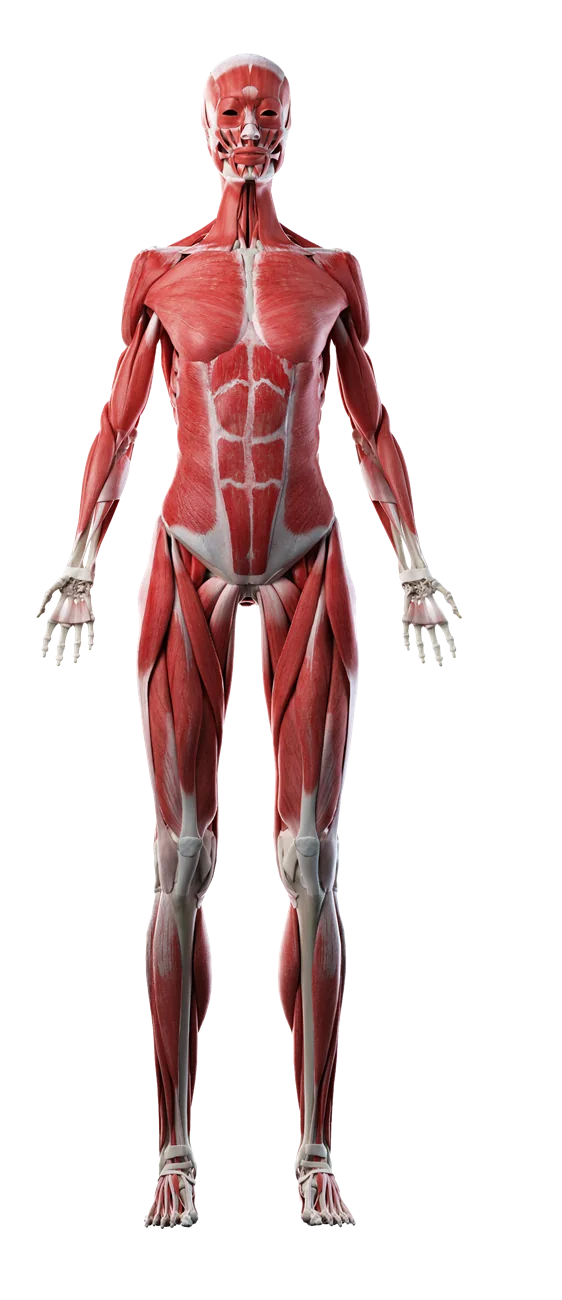
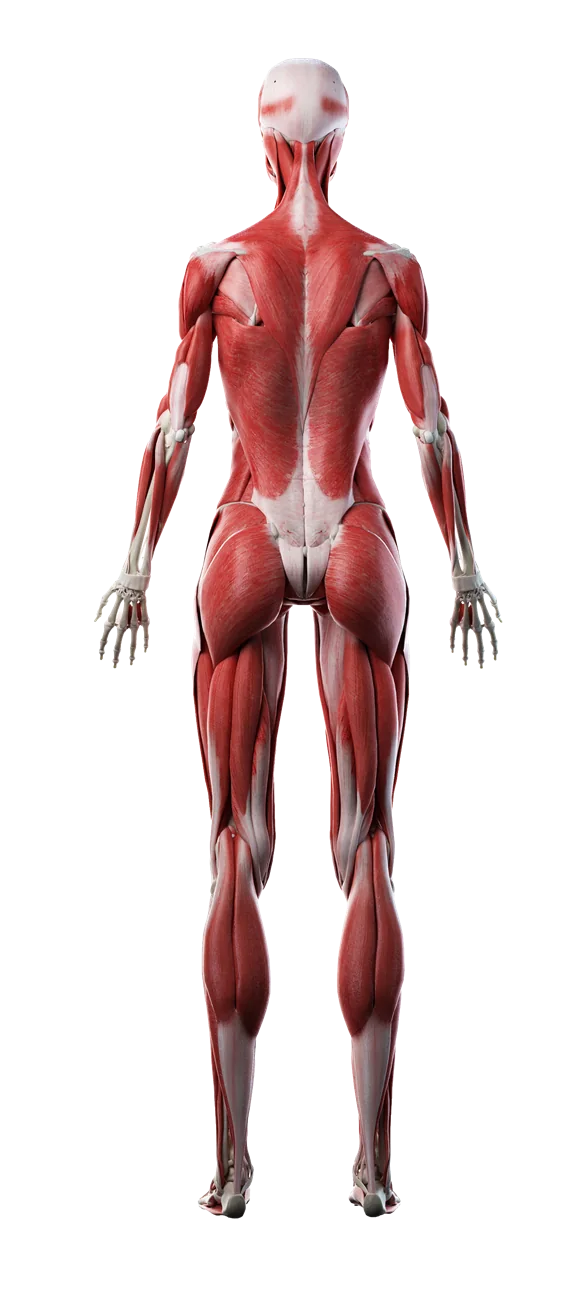
A muscle map that fires for you.
EMS sends a comfortable electrical pulse through skin-surface pads directly to the muscle, bypassing the brain and triggering the same fibers your nervous system would, without the joint stress of resistance training. Tap any muscle to see what stimulation does for that group.
- 10-15 mintypical session
- Drug-freeno needles, no meds
- Painlesspleasant tingle only
Common reasons for EMS.
Acute & chronic pain
Localized muscular pain that benefits from targeted stim.
Post-injury rehab
Re-engaging muscles after a back, neck, or extremity injury.
Trigger points
Stuck muscle knots that haven't released with stretching.
Neuropathy program
EMS is included in many neuropathy plans for circulation and reactivation.
Athletic recovery
Used for muscle relaxation and recovery after training.
Post-surgical re-engagement
Wakes up muscles that have shut down after surgery.
What it feels like.
Pads placed precisely
Small adhesive pads positioned on the target area.
Intensity dialed in
We start low and increase to a comfortable, pleasant tingle.
10-15 minutes
You relax. Most people read or close their eyes.
Pads off, back to your day
No downtime, no recovery, instant return to activity.
Quick answers.
Is EMS the same as TENS?
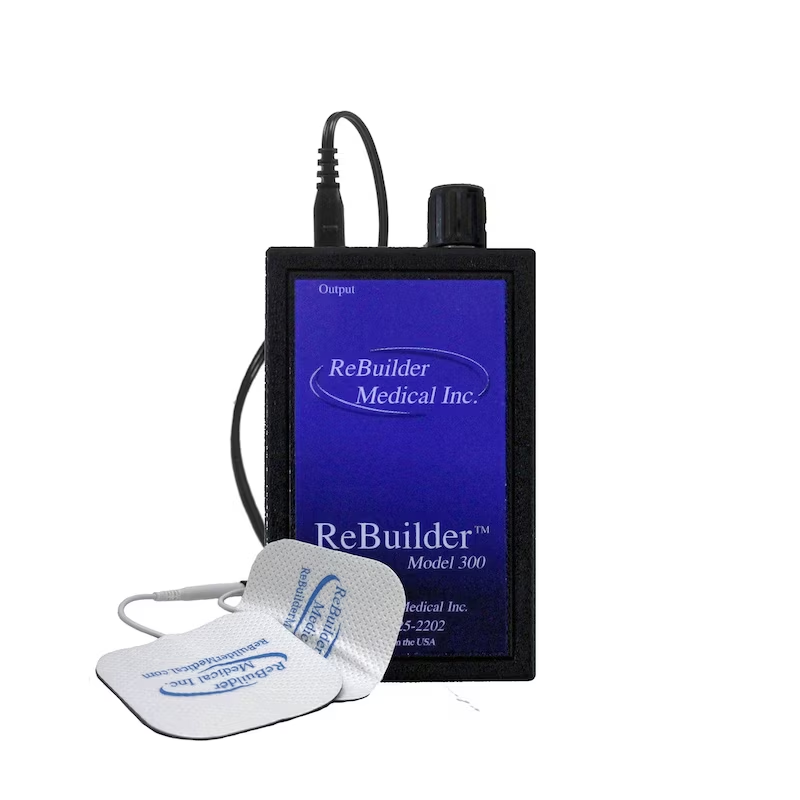
Closely related. TENS focuses on pain modulation through nerve stim; EMS is calibrated to actually contract muscle. We use both depending on the goal.
Does it hurt?
No. The intensity is set to a comfortable tingle. We adjust upward only if it stays comfortable for you.
Will I feel sore afterward?
Sometimes mildly, like after a workout. That's a sign the muscle did real work.
Insurance?
Sometimes covered when paired with chiropractic. HSA/FSA accepted. Payment options →
How electrical muscle stimulation works.
Electrical muscle stimulation delivers carefully calibrated electrical pulses through small adhesive pads on the skin. Those pulses cross the skin barrier and depolarize the motor neuron in the underlying muscle, the same way your brain does, which triggers a controlled muscle contraction without your conscious effort. EMS therapy is widely used in clinical rehab settings because it lets us recruit a muscle that has shut down or guarded, without forcing you to push through pain to do it voluntarily.
What conditions can EMS therapy help with?
The most common uses for electrical muscle stimulation in our office include stubborn lower-back pain, post-injury muscle inhibition, post-surgical re-engagement of muscles that have stopped firing, trigger-point release, and circulation support inside the neuropathy program. Many patients also use EMS therapy after long-haul travel or hard training to flush legs and shoulders. Studies suggest electrical muscle stimulation may help support recovery, pain modulation, and motor unit recruitment when used consistently as part of a structured care plan.
Does EMS therapy hurt?
No. The sensation patients describe most often is a pleasant, rhythmic tingling that builds into a gentle muscle pull as we increase the intensity. We start low and only dial up to whatever stays comfortable for you. If the area is sensitive (for instance, in early-stage neuropathy or post-surgical scar tissue), we drop the amplitude and the pulse width to a setting your tissue tolerates well. Many patients report that the area being treated actually feels lighter and looser as soon as the EMS pads come off.
How is EMS different from a TENS unit?
This is one of the most common questions we get. TENS (transcutaneous electrical nerve stimulation) is calibrated specifically for pain modulation, it stimulates sensory nerves to gate the pain signal, which is why over-the-counter TENS pads exist for home use. Electrical muscle stimulation, by contrast, is calibrated to actually contract the muscle. The waveform, frequency, and pulse duration are different. In our office we use both depending on whether the goal is pain relief, muscle re-engagement, circulation, or rehab, and we'll often layer them in the same visit. Clinical EMS runs more waveforms than any home unit can deliver, which is part of why the in-office result tends to be more pronounced.
Can EMS therapy build muscle?
Electrical muscle stimulation can recruit a muscle and improve neuromuscular control, but it isn't a replacement for resistance training. Where EMS therapy genuinely shines is reactivating muscles that have shut down, after a sprain, a surgery, or an episode of severe back pain, so you can return to normal movement faster. Many patients use EMS as a bridge that lets them get back to the gym, walking, or daily activity sooner than they would otherwise.
Who should not use electrical muscle stimulation?
Electrical muscle stimulation isn't appropriate for patients with implanted cardiac pacemakers or other implanted electrical devices, over open wounds, over malignancy, in early pregnancy near the abdomen, or directly over the carotid sinus in the neck. We screen for contraindications during your evaluation. If EMS therapy isn't right for you, we'll route you to laser, decompression, or a different therapy that fits your case.
How quickly will I feel a difference?
Many patients notice a difference inside the first electrical muscle stimulation session, a localized loosening, a drop in pain, or a "wake-up" feeling in a muscle that had gone quiet. Cumulative effects build over multiple visits, especially when EMS therapy is paired with chiropractic adjustments, decompression, or laser. Dr. Banman maps the cadence based on your goals during the initial exam.
Wondering if EMS fits?
One quick call and we'll talk through whether it's worth trying for your case. No pressure either way.