
Back pain? The real question is what's causing it.
Back pain is easy to feel and hard to pin down. The spot that hurts is often not where the trouble starts. Imaging can muddy that more than it clears it up: plenty of people have a disc bulge on their MRI and zero pain, while others hurt for months with a scan that reads perfectly normal. A picture tells you the shape of a disc or joint, not what's firing the pain. So the first visit here in Lakewood Ranch has one job: find where your back pain is actually coming from. From there, you and Dr. Banman decide what to do about it.
Back pain has a lot of possible causes, and our tools aren't the answer for all of them. A strain that would settle on its own doesn't need a decompression table, and a few cases belong with a surgeon. The first visit sorts out which kind yours is, and if we're not the right fit, we'll say so and point you toward who is.
- Root-causeNot just symptom relief
- 23+ yrsof expertise
- Same-dayoften available

Pick the structure that's giving you trouble.
A 3D render of the lumbar spine, the L1-L5 vertebrae, intervertebral discs, sciatic nerve roots, paraspinal muscles, and the SI joints. Pick a structure from the buttons below and you'll see the typical pain pattern, what causes it, and what we treat it with at SWC.

What's actually causing it.
Disc bulge or herniation
Disc material pressing on a nerve. Often shows up as low back pain with leg symptoms.
Muscular strain
Lifting wrong, sleeping wrong, an awkward twist. Sharp at first, often resolves with care.
Joint dysfunction
Spinal segments stuck or moving poorly. Tightness, stiffness, restricted movement.
Sacroiliac (SI) joint pain
One-sided low back / hip pain, often with sitting or standing too long.
Postural / desk-job patterns
Long hours seated stiffening the mid-back and overworking the low back.
Stenosis, arthritis, or spondylolisthesis
Wear-and-tear changes and vertebral slippage that often need a blended care approach.
A blended, root-cause plan.
Your back pain has a specific cause, so your plan should too. We pick the treatments that fit what we actually find on your exam.
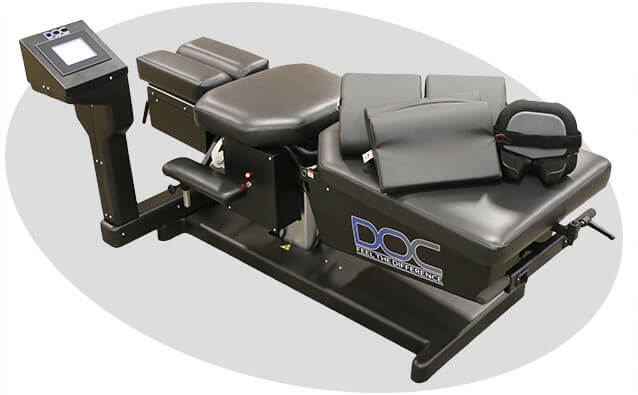
Spinal Decompression
For disc-related cases, takes pressure off the disc and irritated nerves.
See the program →Chiropractic Adjustments
Free up spinal joints that have gotten stiff or stuck, so your back moves better.
How it helps →Class IV Laser
Calms inflamed tissue and supports recovery.
What it does →Shockwave Therapy
For chronic muscular and tendon trigger points.
When it fits →When back pain needs urgent care.
Most back pain is non-emergent, but call your physician or 911 if you have any of these signs:
- Sudden weakness or paralysis in a leg
- Loss of bladder or bowel control
- Numbness in the groin or inner thighs
- Severe pain after a major fall or trauma
- Pain accompanied by unexplained fever, chills, or weight loss
Quick answers.
Should I rest or move?
Brief rest can help acute flare-ups (24 to 48 hours), but extended bed rest is usually counterproductive. Gentle movement is almost always part of recovery, we'll tell you exactly what's appropriate.
Will I need imaging?
Only if it would change the plan. Many cases don't need imaging at all. If we recommend it, we'll explain what we're looking for.
How fast can I expect relief?
Many patients feel meaningful improvement within the first few visits. Stubborn or chronic cases need a more consistent plan, we'll be honest with you about what to expect.
Will my insurance cover this?
Some treatments are sometimes covered (chiropractic). Others (decompression, laser, shockwave) are typically not. HSA/FSA accepted. Payment options →
What causes chronic back pain?
Chronic back pain is usually more than one problem. It's a few things stacked up over months or years. That's why a quick fix aimed at just the soreness rarely holds.
Disc-related back pain
Bulging or herniated lumbar discs are one of the most common drivers. When disc material presses on a nerve root, you may feel sharp lower back pain, leg radiation, or stiffness with bending. Targeted spinal decompression is often part of the plan. Long-term disc wear can also develop into degenerative disc disease, a common source of chronic low back pain.
Posture & muscle imbalance
Long hours at a desk, repetitive lifting, or favoring one side can leave deep core muscles weak and surface muscles overworked. A lot of patients find that fixing posture and how they move holds up better over time than just getting worked on and going home.
Joint & nerve compression
Stuck spinal segments and irritated nerves can keep the pain cycle running long after the original injury has healed. In our experience, combining adjustments, decompression, and laser therapy often helps calm this pattern. We'll watch how your back responds and adjust as we go. If your pain radiates into a leg, see sciatica; if it's a known disc issue, see disc issues.
Let's find out what's causing your back pain.
The first visit answers one question: what's actually driving your pain, and whether what we do here can help. Sometimes it's yes. Sometimes it's a referral somewhere else. Either way, you'll leave knowing why.